What Are Soil Aggregates and Why Should You Care?

Introduction
To the casual observer, it’s just dirt.
A simple, inert medium we walk on, build on, and grow things in. But for those of us dedicated to understanding the earth—the soil scientists, agronomists, regenerative farmers, and environmental stewards—we know the profound truth: soil is a living, breathing, and intricately structured ecosystem.
And the secret to its health, productivity, and resilience lies in its architecture.
The master architects of this underground world are soil aggregates.
These humble clumps of earth are the fundamental building blocks that dictate nearly everything about a soil's function. They control how water moves, whether roots can thrive, how much carbon is stored, and whether our precious topsoil stays on the land or washes away with the rain.
For too long, we have managed soils by focusing on chemistry alone, often at the expense of its physical structure and biology. This has led to widespread degradation, compaction, and erosion.
To build a future of food security and climate resilience, we must shift our focus downward, into the very structure of the soil itself.
This article will take you on a deep dive into the world of soil aggregates—what they are, how they form, why they are the single most important indicator of soil health, and how we can manage our lands to regenerate them.

What is a Soil Aggregate?
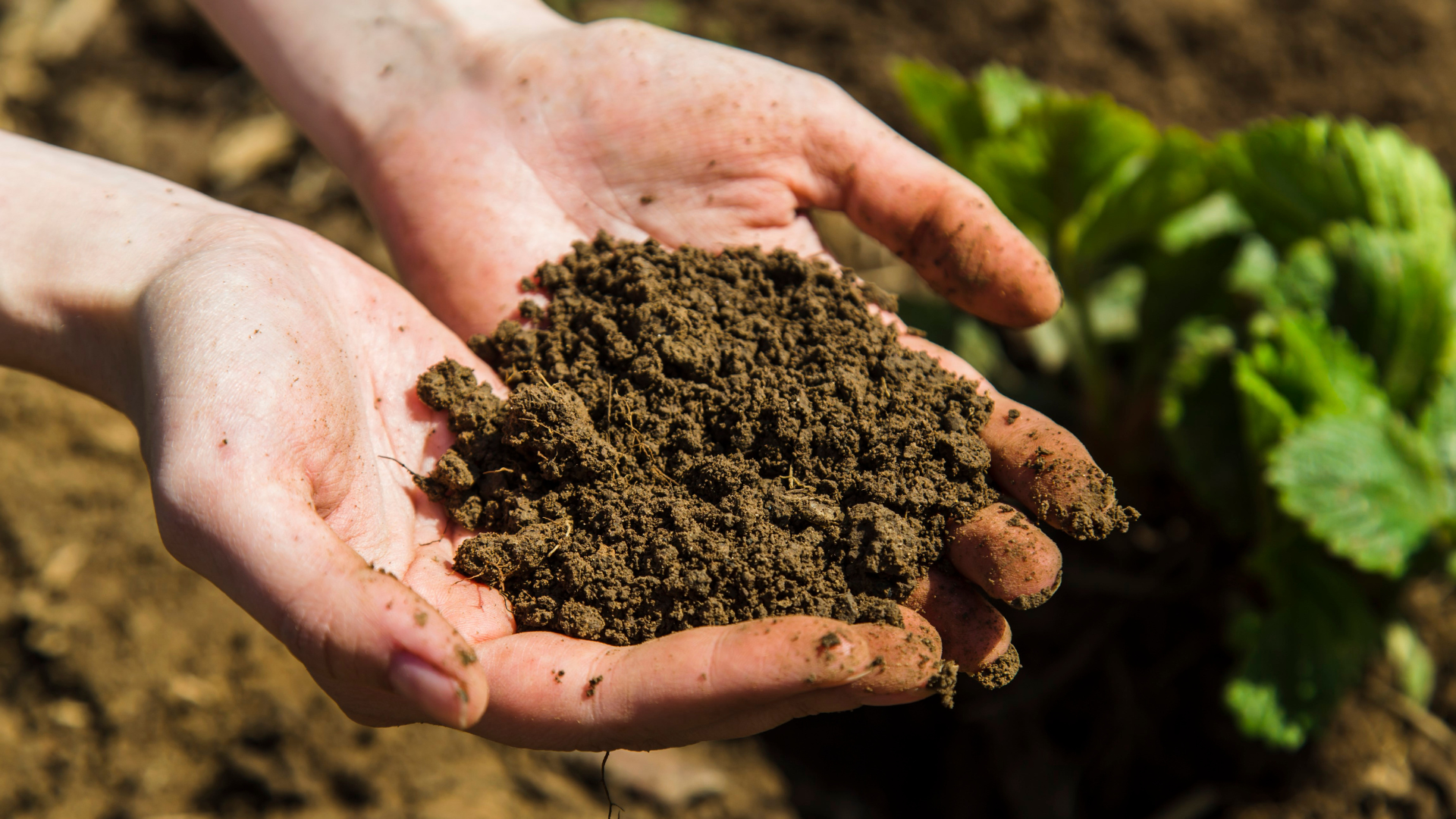
A soil aggregate is not just a random clod of dirt. It’s a naturally formed, hierarchical structure where a variety of forces and glues bind together primary soil particles (sand, silt, and clay). Think of it like building a house.
At the base of this structure are microaggregates (smaller than 0.25 mm). These are the foundational "bricks" of our house.
They are formed when tiny clay and silt particles are tightly cemented together by persistent, stable forms of organic matter (humus) and mineral compounds. These bonds are incredibly strong, making microaggregates highly durable.
Their most critical job is long-term security: they physically protect particles of organic carbon from being decomposed by microbes, effectively locking that carbon away for decades or even centuries.
From these bricks, we build the rooms of the house: the macroaggregates (larger than 0.25 mm). These larger, often visible structures are formed when microaggregates, sand, and silt are bound together by more temporary, biological "mortars." These include:
Physical Enmeshment: The fine, web-like network of plant roots and fungal hyphae (the thread-like bodies of fungi) that physically wrap around and hold particles together.
Biological Glues: Sticky, sugar-based substances (polysaccharides and glycoproteins) secreted by plant roots and microbes. The most famous of these is glomalin, a potent "super-glue" produced by mycorrhizal fungi that is one of the most important agents in stabilizing macroaggregates.
This hierarchical system is ingenious. The large macroaggregates create the vital macropores, or large air spaces, between them.
These are the hallways and ventilation shafts of the soil house, allowing water to infiltrate, excess moisture to drain, air to circulate, and roots to explore freely.
The smaller microaggregates within them create the micropores, the tiny spaces that act as the soil's pantry, holding onto plant-available water through capillary action.
A healthy soil has a robust population of both, creating a structure that can simultaneously drain freely and store water for a dry spell—the holy grail of soil management.

The Genesis of an Aggregate: A Symphony of Forces
Aggregates are not born overnight. Their creation is a masterful interplay of physics, chemistry, and biology, working in a synergistic cascade.
The Physical Foundation: Abiotic forces lay the initial groundwork. Cycles of wetting and drying (especially in clay soils) and freezing and thawing cause the soil to swell and shrink, creating pressure that forces particles together while forming large cracks that define the initial boundaries of large peds.
The Chemical Cohesion: Next, chemistry steps in. Clay particles naturally carry a negative charge and repel each other. Flocculation occurs when positively charged ions, especially calcium (), act as bridges, neutralizing the negative charges and allowing clay particles to clump together. This is why calcium is essential for good structure, and why sodium (Na+), which does the opposite, can destroy it. These initial clumps are then cemented by both inorganic compounds (like carbonates) and, most importantly, the stable organic compounds that form organo-mineral complexes—the heart of the durable microaggregate.
The Biological Architects: While physics and chemistry lay the foundation, life is the master builder, especially for the all-important macroaggregates.
Plant roots are active engineers, physically binding soil with their dense networks and releasing a constant stream of sugary exudates. These exudates are pure energy for the soil food web, feeding the microbes that produce the glues that bind aggregates.
Mycorrhizal fungi, in their symbiotic partnership with plants, create vast hyphal networks that act as a living net, while coating soil particles with water-resistant glomalin.
Bacteria secrete their own sticky polymers that glue particles together.
Earthworms are the ultimate ecosystem engineers, burrowing through the soil and ingesting a mix of minerals and organic matter, excreting them as incredibly stable, nutrient-rich aggregate "casts."
This cascade reveals a profound truth: a living soil is a structured soil. Biology cannot build a stable house on a poor chemical and physical foundation, but without the final biological construction, the soil remains a pile of bricks, lacking the life-giving porosity required for optimal function.
Why Aggregates are a Soil's Most Valuable Player?
So, why should we care so deeply about these clumps of earth? Because their presence and stability underpin every critical service we ask of our soils.
Water Management: Good aggregation creates a dual-function water system. The macropores between aggregates allow rainwater to infiltrate rapidly, preventing surface runoff, erosion, and flooding. The micropores within aggregates store that water, making it available to plants during dry periods. This is the key to drought resilience.
Aeration and Root Growth: The macropore network is also the soil's respiratory system, allowing oxygen to reach plant roots and beneficial microbes. These pores provide low-resistance pathways for roots to grow deep, accessing a greater volume of soil for water and nutrients. In compacted, poorly aggregated soil, roots are stunted, and the soil becomes anaerobic and toxic.
Nutrient Cycling and Fertility: Aggregates are hotspots of biological activity. They protect organic matter from rapid decomposition, creating a slow-release reservoir of nutrients. This stable organic matter is the foundation of long-term fertility.
Erosion Control: Aggregate stability is our number one defense against erosion. Stable aggregates resist the impact of raindrops and the force of wind. When aggregates break down, loose particles clog the surface, creating an impermeable crust that accelerates water runoff and soil loss.
Carbon Sequestration: This may be the most globally significant function. The primary mechanism for long-term carbon storage in soil is the physical protection of organic matter within microaggregates. By shielding carbon from microbial decomposition, stable aggregates turn soil into a powerful, long-term carbon sink. Management that builds aggregates is a direct climate solution.

The Two Paths: Practices that Destroy vs. Regenerate Structure
The state of a soil's aggregation is a direct reflection of how it is managed. Our actions can either set in motion a vicious cycle of degradation or a virtuous cycle of regeneration.
Practices that DEGRADE Aggregates:
Intensive Tillage: Plowing and disking are the number one enemy of soil structure. They physically shatter aggregates and inject a blast of oxygen that causes microbes to rapidly burn through soil organic matter—the very glue holding the soil together.
Bare Fallows & Residue Removal: Leaving soil bare exposes it to the erosive power of rain and wind. Removing crop residues starves the soil food web of its energy source.
Monoculture Cropping: Planting the same crop year after year creates a lack of biological diversity, leading to a simplified and weaker structure.
Misuse of Chemicals: Over-application of certain synthetic fertilizers can acidify soil and harm microbial communities. Pesticides can have non-target effects on beneficial organisms like fungi and earthworms.
Practices that REGENERATE Aggregates:
The solution lies in a system of practices that work with nature's aggregate-building processes:
Minimize Disturbance: This is the golden rule. Reducing or eliminating tillage (no-till/conservation tillage) protects existing aggregates and allows the delicate networks of fungal hyphae and earthworm burrows to remain intact.
Keep the Soil Covered: Using cover crops and retaining crop residue (mulch) armors the soil surface against erosion, moderates temperature, conserves moisture, and provides a steady food source for soil life.
Maximize Living Roots & Diversity: Living roots are the engine of aggregation. Cover crops and diverse crop rotations ensure that roots are in the ground for as much of the year as possible, constantly feeding the soil food web. Different root structures from different plants build a more complex and resilient aggregate profile.
Maximize Organic Matter Inputs: Applying compost and manure provides a direct infusion of carbon and stimulates the entire soil food web, kick-starting the biological engine of aggregation.
The Challenge of Measurement: Seeing the Invisible
For decades, assessing aggregate stability has been a laborious, time-consuming process confined to the lab. Farmers and land managers make decisions based on last year's soil tests and visual observations, but they are flying blind when it comes to the real-time, dynamic changes happening in their soil's structure.
How do you know if your new cover crop mix is working now? How can a company developing a new biostimulant prove its effect on soil structure in real-time? How can a researcher track the immediate impact of a rainfall event on aggregate stability?
Until now, answering these questions has been nearly impossible. We have been managing a complex living system with lagging, incomplete data. To truly optimize for soil health and unlock the full potential of regenerative agriculture, we need to move from hindsight to insight. We need to see the invisible.
From Insight to Action with Biosensor Solutions
This is where the next revolution in soil management begins. At Biosensor Solutions, we are developing cutting-edge BioSensors designed to provide the first-ever real-time, in-field measurements of the key biological and physical indicators of soil health, including aggregate stability.
Our technology translates the complex language of the soil into actionable data, closing the gap between management practices and their immediate outcomes.
To accelerate this revolution, we are launching the Biosensor Solutions Soil Health Pilot Program.

This is an exclusive opportunity for the pioneers in soil health—leading researchers, innovative agricultural companies, and forward-thinking farm consultants—to partner with us. As a member of the Pilot Program, you will:
Gain early access to our groundbreaking BioSensor technology and be among the first in the world to deploy it in your research plots, product trials, or on-farm systems.
Collaborate directly with our science team to co-design experiments and validate the impact of your work on soil function in real-time.
Generate unparalleled data sets that demonstrate product efficacy, optimize management strategies, and provide a deeper understanding of the soil ecosystem.
If you are working to improve crop production, develop the next generation of soil amendments, or push the boundaries of soil science, the Soil Health Pilot Program is your chance to lead the way.
Stop guessing and start measuring.
Visit us at www.biosensorsolutions.com to learn more about the Biosensor Solutions Soil Health Pilot Program and apply this form to join us on the frontier of soil intelligence.
Join Our 2026 Regenerative Digital Soil Health Pilot!
Are you a grower, farm advisor, or ag-tech provider exploring the future of regenerative agriculture?
BioSensor Solutions is launching our 2025 Digital Soil Health Pilot — and we’re seeking forward-thinking partners to join us.
Ideal Pilot Partners
- 🌿 Growers and farm advisors — trialling regenerative practices
- 🧪 Biofertilizer producers — validating microbial performance
- 🔗 Ag-tech integrators — embedding live soil data
- 🛒 Retailers — enabling regenerative sourcing
Let’s Collaborate!
We’re currently partnering with innovators across the agriculture value chain to test and refine our real-time soil sensing platform. If you're ready to explore what’s happening beneath the surface, we’d love to hear from you.
Contact us today to schedule a meeting and learn more about the pilot program.


Anjali Singh is a scientific content creator who combines her background in plant biotechnology, deep interest in soil science, and strong writing skills to craft clear, engaging content—from in-depth articles to impactful social media posts.
She specializes in translating complex scientific concepts into accessible, meaningful narratives that inform, inspire, and spark curiosity.
As a committed science communicator, Anjali’s goal is to make science approachable while fostering a deeper understanding and appreciation for the natural world.
🔗 Connect on LinkedIn